

What is procurement quotation: the complete guide
Quoting is asking several suppliers for the same item and comparing the answers. Sounds simple, but it's where a company wins or loses margin. Here's what it is, why it matters for cash flow, the stages, and how to decide by total cost.
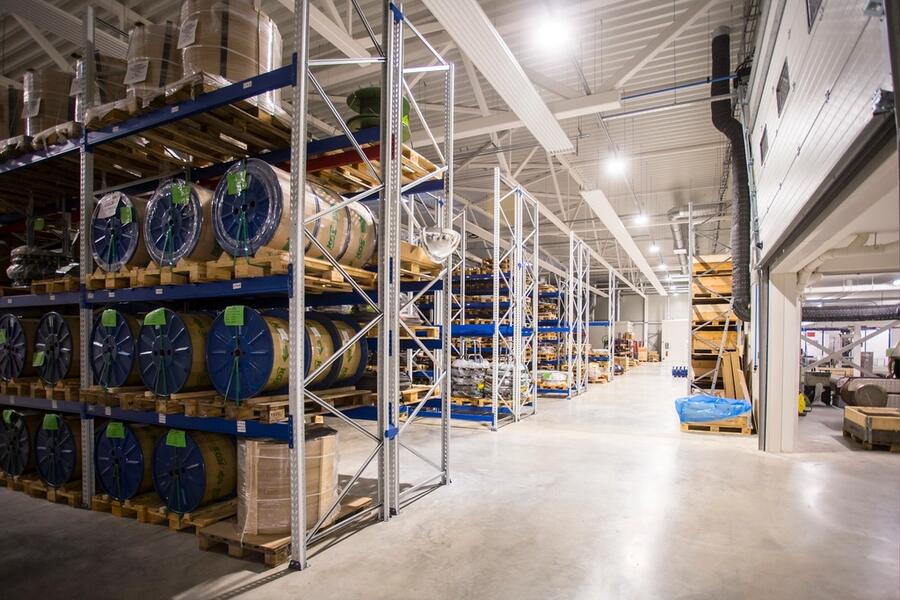

Every purchase that matters starts with the same question: who is offering the best deal? Answering that off the top of your head is a guess. Answering it with three proposals on the table, side by side, is quotation. It's the step that separates buying well from buying from the first one who replied — and, at the end of the month, it's what shows up (or vanishes) in your cash flow.
What procurement quotation is
Procurement quotation is the process of asking several suppliers for the price and terms of the same item and comparing the answers to choose the best purchase. "Best" isn't only the lowest price: it takes in lead time, freight, payment terms, quality, and how much you can trust the seller.
In practice, you take a need — "I need 200 meters of flexible cable" — and turn it into comparable information: supplier A charges one amount with delivery in five days, supplier B charges another with immediate delivery. Without that organized comparison, any purchasing decision becomes a bet.
You quote; the supplier quotes back. The quote is the proposal they send in response to your quotation. That's why, day to day, plenty of people use the two words interchangeably — and that's perfectly fine.
Why it matters for company cash flow
Quotation is the point where a company exercises its bargaining power. Always buying from the same supplier "out of habit" costs more in a way that doesn't always show up on the invoice: above-market prices, poor lead times, and dependence on a single partner who one day slips or goes quiet.
Quoting well brings concrete gains:
- Reference price. Comparing proposals shows the real price range for that item right now, not last year's.
- Negotiating power. Having a competing offer in hand gives you an argument to negotiate with any of them.
- Traceability. A documented process shows why that supplier was chosen — useful for audits and for defending the decision later.
- Lower risk. Knowing your alternatives keeps you from being held hostage to a single supplier.
The more items and suppliers in play, the more organization matters. A two-item quotation you can settle by eye. One with a hundred and fifty items across six suppliers, you can't.
When you use a quotation
Quotation isn't just for big factory purchases. It shows up anywhere there's more than one possible supplier:
- buying materials for a job site or a customer order;
- restocking inventory that repeats every month;
- hiring a one-off service;
- switching suppliers when the current one raised prices.
The rule of thumb: if the purchase matters to the bottom line and there's more than one place to buy it, it's worth quoting. For purchases that repeat, it's worth re-quoting every so often — supplier prices don't stand still.
The stages, in short
The process repeats itself, whether the company is big or small. In short:
- Define the need. Describe the item precisely: code, description, quantity, unit, and whatever else matters.
- Pick the suppliers. Ideally at least three, so you have a basis for comparison.
- Send the quotation. Give everyone the same information, so you compare apples to apples.
- Receive and organize the quotes. Pull the responses together into a comparable format.
- Compare and negotiate. Weigh price, lead time, and terms; negotiate when it makes sense.
- Decide and issue the order. Pick the supplier and make the purchase official.
Each phase has details that move the result. For the in-depth, step-by-step walkthrough with tips at every stage, see the guide to the procurement quotation process.
Buying well isn't stumbling onto the lowest price by luck. It's building a process that makes the best decision the obvious one.
The comparison sheet and total cost
When the quotes come in, the real problem appears: every supplier answers their own way. One sends a PDF, another Excel, another just the body of an email. The items come in different orders, with different descriptions for the same product.
The classic tool for taming this is the comparison sheet: a table where each row is an item and each column is a supplier. At a glance you see who charges what for each product, and you total up the cost of each scenario. Building that matrix by hand is tedious and easy to get wrong — one wrong quantity is enough to throw the whole comparison off. We explain how to structure it in the guide to the price comparison sheet.
With the sheet ready comes the trap: looking only at each item's unit price. What hits cash flow is the total cost of the order — quantity, freight, lead time, and payment terms. The supplier with the cheapest item may have the priciest freight, or cover only half the list. A few questions that help you decide:
- Who delivers the complete list and who covers only part of it?
- Is buying everything from one better than splitting the order between two?
- Does the lowest price come with an acceptable lead time, or is delivery way too slow?
- Has the cheapest one had delays or quality problems before?
Cross-referencing those numbers is exhausting in a spreadsheet. We've gathered the tactics to compare suppliers by total cost, with the main decision modes, in a guide of its own.
The data-entry bottleneck and how AI solves it
Here's the drain. If comparison were only math, it would be easy. The problem is that the information arrives in formats that don't talk to each other: a polished PDF you can't copy from, a spreadsheet with its own layout, a skewed WhatsApp photo, a stamped scan. To compare, someone sits down and retypes it item by item.
And retyping is where money leaks. One wrong digit in the price and you close the order too high. One skipped quantity and material runs short on the job. Those errors don't show up right away — they show up on the invoice, once it's too late. And there's the clock: while you type, the competitor who answered the customer in minutes has already closed the sale.
This is the bottleneck AI solves. You drop in the file and get the items ready. PDFs, spreadsheets, skewed photos, screenshots, or a supplier catalog all upload the same way, and back comes a list with code, description, quantity, unit, and price — line by line, in the right column. With a catalog, instead of flipping through forty pages hunting for a code, you upload the file and it lists the products one by one. See how to extract from PDF, Excel, and images the items without retyping.
Anyone who lives in spreadsheets isn't stuck: when you're done, you export to Excel and take it to your usual spreadsheet. And the detail that changes the game — if you tweak that Excel (fix a description, merge two items, correct a quantity), you can send the spreadsheet back and extract it again with your changes already in. It also comes out as PDF and as a ready-to-send WhatsApp message. If the question is manual spreadsheet versus a tool, we compare both sides in quote spreadsheet or AI.
No magic promises: no system gets a blurry photo 100% right, and anyone who swears otherwise is lying. That's why the result lands in a table for you to check and fix before you use it. The machine does the heavy lifting; the final word is yours.
Upload a quote and watch it become a list
A PDF, a screenshot, a spreadsheet, or a catalog. In seconds you have the items in a table ready to compare.
Create accountTo get started with your file, the help center shows how to upload the quote and export the order.
Frequently asked questions
What is procurement quotation?
It's asking several suppliers for the price and terms of the same item and comparing the answers to choose the best purchase. Best doesn't mean only the lowest price: it takes in lead time, freight, payment terms, and who actually delivers.
What's the difference between a quotation and a quote?
Two sides of the same coin. You quote; the supplier quotes back. The quote is the proposal they send in response to your quotation. Day to day, plenty of people use the two words interchangeably.
What is a price comparison sheet?
It's a table where each row is an item and each column is a supplier. At a glance you see who charges what for each product, and you total up the cost of each scenario.
Should I always buy the lowest unit price?
Not always. What hits cash flow is the total cost of the order: quantity, freight, lead time, and payment terms. A cheap item with expensive freight or a bad lead time can end up worse than a competitor.
Can I stop retyping quotes by hand?
Yes. OrbitQuote reads PDFs, spreadsheets, WhatsApp photos, skewed scans, and even supplier catalogs, and returns the items as a list with code, description, quantity, unit, and price, ready to check and compare.
From a stack of quotes to a decision
Create your account, extract the items from your quotes, and compare suppliers in minutes.
Read next
-

Process
Procurement quotation process: step by step
The detailed stages for running a quotation from start to finish, with tips at every phase.
-

Comparison
How to compare quotes from multiple suppliers
Put suppliers side by side and close on the best overall set, not the lowest standalone price.